
How to Choose Between Anki and Quizlet for Studying Today – Choosing the right study tool can feel hard. Yet two apps stand out for flashcards: Anki and Quizlet. Both help you memorize facts. However, they work in very different ways. Therefore, the best pick depends on your goals, time, and subject.
In this guide, we look at current features from recent comparisons. Then we show clear steps to decide. As a result, you can pick the tool that fits your study needs right now.
What Anki Offers Today
Anki is a free flashcard app focused on long-term memory. It runs on desktop and Android at no cost. The official iOS app costs a one-time fee of about $25. Moreover, it syncs free across devices via AnkiWeb.
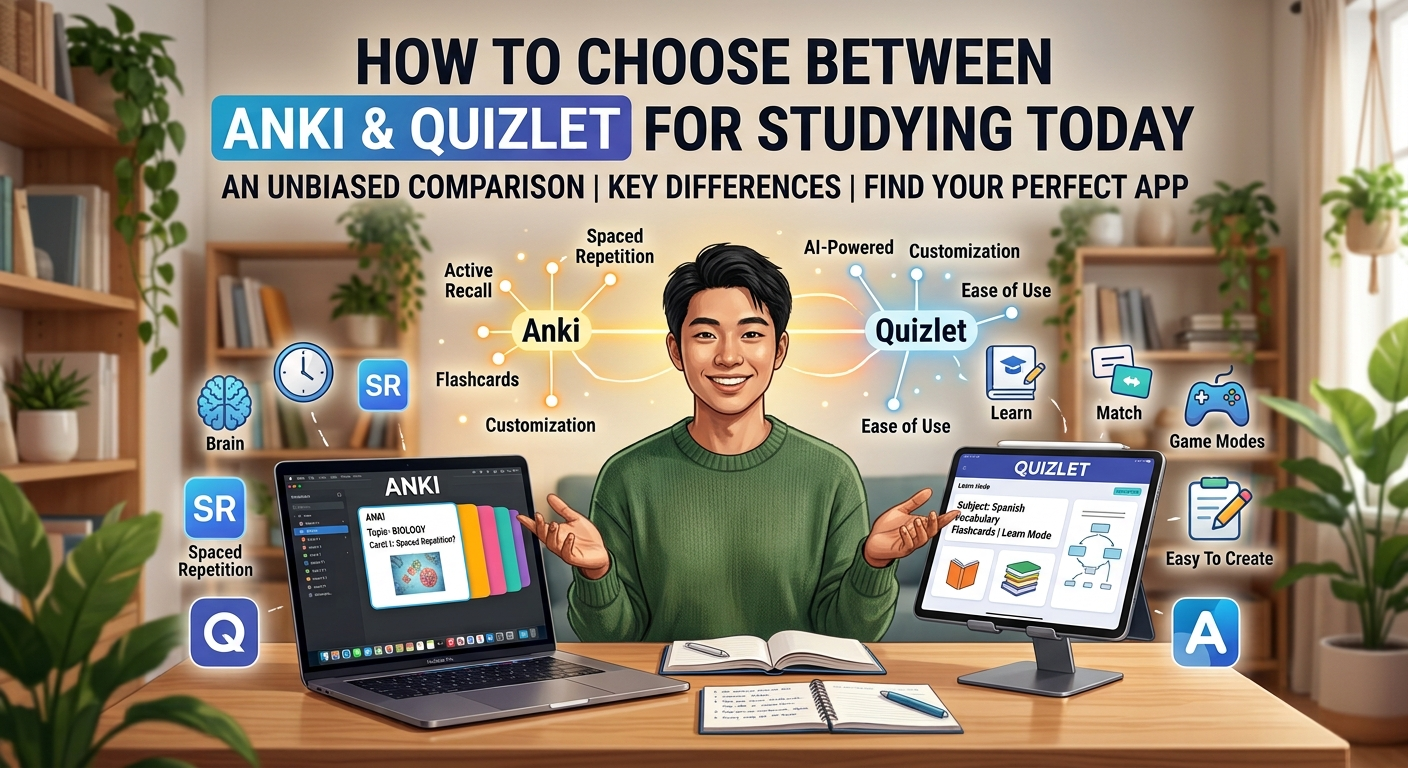
Its main strength is spaced repetition. The system uses algorithms like SM-2 or the newer FSRS. Cards you know well appear less often. Hard cards show up more. This matches how memory fades over time. Studies and user data support this approach for strong retention over months or years.
In addition, Anki lets you customize almost everything. You can add images, audio, cloze deletions, or even LaTeX for formulas. Thousands of shared decks exist, especially for medicine and languages. Add-ons expand it further. However, the interface looks dated. The learning curve is steep. New users often need days or weeks to feel comfortable.
As a result, Anki shines when you must keep large amounts of information for a long time.
What Quizlet Offers Today
Quizlet is a polished, easy flashcard platform. It works well on web, iOS, and Android. The free version includes ads and limits some modes. Quizlet Plus costs around $36 per year and unlocks more features, including offline access and advanced tools.
Quizlet makes starting simple. You can create sets fast or search millions of ready-made ones. Study modes include flashcards, Learn, Match, and games. Some AI tools help generate content from notes, though many sit behind the paywall.
Its review system adapts inside a session. Missed cards repeat more. Yet it lacks true long-term spaced repetition scheduling like Anki. Therefore, it works better for short bursts than multi-year retention.
On the other hand, Quizlet feels fun and social. Classes can share sets easily. Group games add energy. The design is clean and modern. As a result, most people can begin studying in minutes.
If you’re unfamiliar with either platform, start with our Anki and Quizlet beginner guide.
Key Differences That Matter
First, consider memory science. Anki schedules reviews based on your actual forgetting curve. Quizlet focuses more on practice within one sitting. Research and student reports show Anki often leads to better long-term scores in demanding fields.
Next, look at ease of use. Quizlet wins here. Its interface needs almost no training. Anki requires more setup and patience. However, once learned, Anki saves time over months because reviews stay efficient.
Price also differs. Anki stays free for most users. Quizlet’s best features need a subscription. In addition, Anki works fully offline. Quizlet’s free tier does not.
Content libraries vary too. Quizlet has far more ready sets for everyday classes. Anki’s shared decks excel in specialized areas like medical boards. Customization favors Anki heavily. Quizlet keeps things simple by design.
Finally, study style plays a role. Quizlet supports collaboration and games. Anki is mainly solo and serious.
When to Choose Anki
Pick Anki if long-term retention is your main goal. Medical students, law students, language learners, and anyone facing board exams often prefer it. For example, if you need thousands of facts to stick for years, Anki’s algorithm helps most.
It also fits people who like control. You can tweak every setting. Moreover, free access on desktop and Android makes it budget-friendly. If you can spend a weekend learning the tool, the payoff grows over time.
However, skip Anki if you hate complicated software or only study for one short test. The daily review habit also demands consistency. Missing days can pile up cards.
When to Choose Quizlet
Choose Quizlet when speed and ease matter most. If your test is next week, or you need quick vocabulary review, Quizlet gets you started fast. Classmates often already share sets there. Therefore, collaboration feels natural.
It suits younger students or anyone who prefers games and variety. The polished apps make studying feel lighter. In addition, AI helpers can turn notes into cards quickly for paid users.
On the other hand, avoid relying only on Quizlet for multi-year knowledge. Its scheduling is simpler. Free limits and ads can also frustrate heavy users.
Simple Steps to Decide Today
Start by listing your needs. Ask yourself these questions:
- How long must I remember the material? Months or years points to Anki. Days or weeks points to Quizlet.
- How much time can I spend learning the app? Little time favors Quizlet. Some setup time opens Anki.
- Do I need group features or games? Quizlet wins. Solo deep work favors Anki.
- What is my budget? Anki stays cheaper for most. Quizlet’s yearly fee buys convenience.
- Is there a good shared deck already? Check both platforms.
Next, try both free versions. Create a small set of 20 cards. Study for a few days. Then compare how each feels. As a result, personal experience often settles the choice better than any review.
You can also mix them. Use Quizlet for quick class sets. Move key facts into Anki for lasting memory. Many students do this successfully.
Final Thoughts
Anki and Quizlet both help you study better than plain notes. Yet they serve different purposes. Anki builds lasting knowledge through smart scheduling and deep customization. Quizlet delivers fast, friendly practice with huge ready content.
Therefore, match the tool to your situation. If retention over time is critical and you accept a learning curve, go with Anki. If you want simple starts, fun modes, and shared sets right away, choose Quizlet.
Current comparisons from 2025 and 2026 agree on this split. Test them yourself. Then stick with the one that keeps you reviewing consistently. Good study habits matter more than any single app. With the right choice, your next study session becomes clearer and more effective.
Choosing the right study tool can feel hard. Yet two apps stand out for flashcards: Anki and Quizlet. Both help you memorize facts. However, they work in very different ways. Therefore, the best pick depends on your goals, time, and subject.
In this guide, we look at current features from recent comparisons. Then we show clear steps to decide. As a result, you can pick the tool that fits your study needs right now.
What Anki Offers Today
Anki is a free flashcard app focused on long-term memory. It runs on desktop and Android at no cost. The official iOS app costs a one-time fee of about $25. Moreover, it syncs free across devices via AnkiWeb.
Its main strength is spaced repetition. The system uses algorithms like SM-2 or the newer FSRS. Cards you know well appear less often. Hard cards show up more. This matches how memory fades over time. Studies and user data support this approach for strong retention over months or years.
In addition, Anki lets you customize almost everything. You can add images, audio, cloze deletions, or even LaTeX for formulas. Thousands of shared decks exist, especially for medicine and languages. Add-ons expand it further. However, the interface looks dated. The learning curve is steep. New users often need days or weeks to feel comfortable.
As a result, Anki shines when you must keep large amounts of information for a long time.
What Quizlet Offers Today
Quizlet is a polished, easy flashcard platform. It works well on web, iOS, and Android. The free version includes ads and limits some modes. Quizlet Plus costs around $36 per year and unlocks more features, including offline access and advanced tools.
Quizlet makes starting simple. You can create sets fast or search millions of ready-made ones. Study modes include flashcards, Learn, Match, and games. Some AI tools help generate content from notes, though many sit behind the paywall.
Its review system adapts inside a session. Missed cards repeat more. Yet it lacks true long-term spaced repetition scheduling like Anki. Therefore, it works better for short bursts than multi-year retention.
On the other hand, Quizlet feels fun and social. Classes can share sets easily. Group games add energy. The design is clean and modern. As a result, most people can begin studying in minutes.
Key Differences That Matter
First, consider memory science. Anki schedules reviews based on your actual forgetting curve. Quizlet focuses more on practice within one sitting. Research and student reports show Anki often leads to better long-term scores in demanding fields.
Next, look at ease of use. Quizlet wins here. Its interface needs almost no training. Anki requires more setup and patience. However, once learned, Anki saves time over months because reviews stay efficient.
Price also differs. Anki stays free for most users. Quizlet’s best features need a subscription. In addition, Anki works fully offline. Quizlet’s free tier does not.
Content libraries vary too. Quizlet has far more ready sets for everyday classes. Anki’s shared decks excel in specialized areas like medical boards. Customization favors Anki heavily. Quizlet keeps things simple by design.
Finally, study style plays a role. Quizlet supports collaboration and games. Anki is mainly solo and serious.
When to Choose Anki
Pick Anki if long-term retention is your main goal. Medical students, law students, language learners, and anyone facing board exams often prefer it. For example, if you need thousands of facts to stick for years, Anki’s algorithm helps most.
It also fits people who like control. You can tweak every setting. Moreover, free access on desktop and Android makes it budget-friendly. If you can spend a weekend learning the tool, the payoff grows over time.
However, skip Anki if you hate complicated software or only study for one short test. The daily review habit also demands consistency. Missing days can pile up cards.
When to Choose Quizlet
Choose Quizlet when speed and ease matter most. If your test is next week, or you need quick vocabulary review, Quizlet gets you started fast. Classmates often already share sets there. Therefore, collaboration feels natural.
It suits younger students or anyone who prefers games and variety. The polished apps make studying feel lighter. In addition, AI helpers can turn notes into cards quickly for paid users.
On the other hand, avoid relying only on Quizlet for multi-year knowledge. Its scheduling is simpler. Free limits and ads can also frustrate heavy users.
Simple Steps to Decide Today
Start by listing your needs. Ask yourself these questions:
- How long must I remember the material? Months or years points to Anki. Days or weeks points to Quizlet.
- How much time can I spend learning the app? Little time favors Quizlet. Some setup time opens Anki.
- Do I need group features or games? Quizlet wins. Solo deep work favors Anki.
- What is my budget? Anki stays cheaper for most. Quizlet’s yearly fee buys convenience.
- Is there a good shared deck already? Check both platforms.
Next, try both free versions. Create a small set of 20 cards. Study for a few days. Then compare how each feels. As a result, personal experience often settles the choice better than any review.
You can also mix them. Use Quizlet for quick class sets. Move key facts into Anki for lasting memory. Many students do this successfully.
Before making your choice, take a look at our detailed Anki vs Quizlet comparison
Final Thoughts
Anki and Quizlet both help you study better than plain notes. Yet they serve different purposes. Anki builds lasting knowledge through smart scheduling and deep customization. Quizlet delivers fast, friendly practice with huge ready content.
Therefore, match the tool to your situation. If retention over time is critical and you accept a learning curve, go with Anki. If you want simple starts, fun modes, and shared sets right away, choose Quizlet.
Current comparisons from 2025 and 2026 agree on this split. Test them yourself. Then stick with the one that keeps you reviewing consistently. Good study habits matter more than any single app. With the right choice, your next study session becomes clearer and more effective.