Quizlet Plus vs Anki: Which Study Tool Is Worth It in 2026? – Students face a clear choice in 2026. Do you want fast, simple flashcards or deep long-term memory? Quizlet Plus and Anki both help you study. Yet they work in very different ways.
This guide compares them side by side. We use current 2026 pricing and features from trusted reviews. In the end, you will know which tool fits your goals.
Before comparing the paid features, see our broader Anki vs Quizlet comparison.
Quick Look at the Two Tools
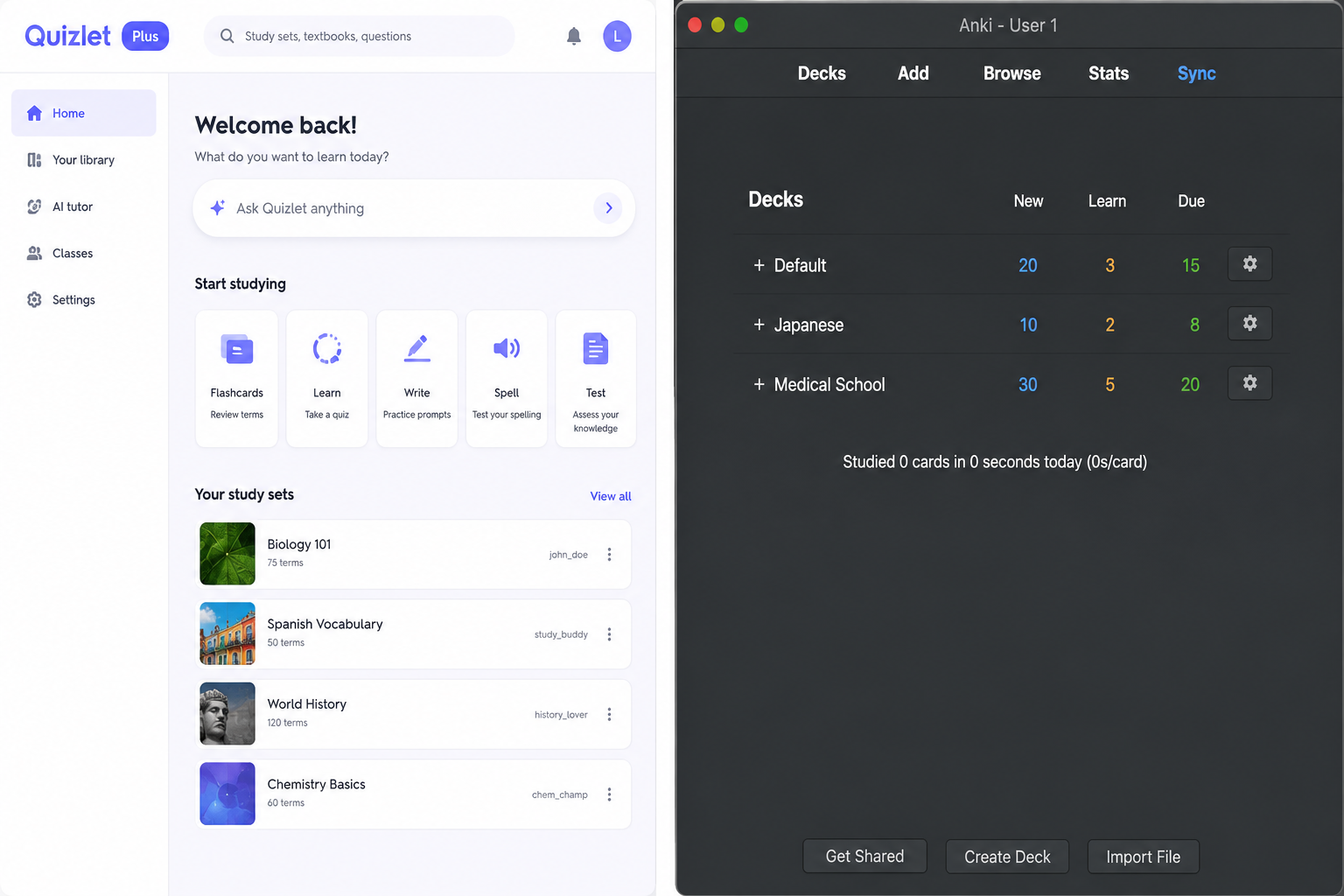
Quizlet is the friendly app most students know. It offers ready-made sets, games, and AI helpers. Anki is the powerful open-source system built for lasting recall. It uses advanced spaced repetition.
Here is a simple side-by-side view:
| Feature | Quizlet Plus | Anki |
|---|---|---|
| Price | $7.99/month or $35.99/year (Plus); ~$44.99/year Unlimited | Free on desktop, Android, web; $24.99 one-time on iOS |
| Spaced Repetition | Basic adaptive Learn mode (paid) | Advanced FSRS or SM-2 (best-in-class) |
| Ease of Use | Very easy, minutes to start | Steep learning curve |
| Pre-made Content | Millions of sets | Strong community decks (great for med) |
| Customization | Limited | Extremely high (add-ons, templates) |
| Offline Access | Yes (with Plus) | Always full offline |
| AI Features | Q-Chat, Magic Notes (Plus) | Limited (add-ons only) |
| Best For | Short-term tests, group study | Long-term retention, heavy fact loads |
Sources confirm these details across multiple 2026 comparisons.
How Spaced Repetition Works in Each App
Spaced repetition is the key difference. It shows you cards just before you forget them.
Anki uses a strong algorithm. It tracks how well you know each card. Then it schedules reviews days, weeks, or months later. In 2026, Anki often defaults to FSRS-6. This model trains on hundreds of millions of real reviews. As a result, you review fewer cards for the same memory strength.
Quizlet’s Learn mode is simpler. It focuses on cards you miss in the current session. Therefore, it works well for a test next week. However, it does not plan reviews months ahead as carefully.
For medical students or language learners, Anki wins here. Studies and user reports show better long-term scores with true spaced systems. On the other hand, Quizlet feels faster for last-minute cramming.
New to these platforms? Start with our complete Anki and Quizlet guide for beginners.
Pricing and Real Value in 2026
Cost matters over a full school year.
Quizlet Plus costs $7.99 per month or $35.99 per year. The Unlimited tier sits at about $44.99 per year. Free users face ads and daily limits on Learn and Test modes. Offline study and full AI tools need the paid plan.
Anki stays free on Windows, Mac, Linux, Android, and the web. The official iOS app costs a one-time $24.99. There are no subscriptions or feature gates. Sync through AnkiWeb is free.
Over four years, Anki often costs under $25 total. Quizlet Plus can reach $140 or more. Therefore, Anki gives stronger long-term value for serious students. Meanwhile, Quizlet’s yearly fee buys polish and convenience right away.
Features That Matter Most
Both tools let you create cards and review them. Yet the experience differs.
Quizlet strengths
- Huge library of shared sets
- Clean mobile apps and fun modes (Match, Test, games)
- AI tools that turn notes into cards or chat with you
- Easy sharing for class groups
These features help when you need speed. You can start studying in minutes.
Anki strengths
- Full offline power on every device
- Custom card types (cloze, image occlusion)
- Add-ons for extra stats and styles
- Precise control over review settings
Anki takes more setup time. However, once set, it runs efficiently for thousands of cards.
In addition, Anki’s community decks for medicine (like AnKing) have no equal on Quizlet. Quizlet’s volume is larger for everyday high-school or college subjects.
Who Should Choose Quizlet Plus?
Choose Quizlet Plus if you want ease first.
It fits students who:
- Study for a quiz in the next few days
- Prefer polished design and game modes
- Share sets with classmates often
- Like AI help turning notes into cards
The free tier works for light use. Yet most serious users need Plus for unlimited Learn mode and offline access. As a result, the subscription makes sense for one or two busy semesters.
Who Should Choose Anki?
Pick Anki if long-term memory is your goal.
It suits people who:
- Prepare for medical boards, bar exams, or language fluency
- Need to keep thousands of facts for months or years
- Do not mind a learning curve
- Want zero ongoing fees
Many users spend a weekend learning Anki. After that, the system saves hours every week. Therefore, the setup cost pays off quickly for multi-year goals.
Direct Comparison Table for Daily Use
| Daily Need | Winner | Why It Wins |
|---|---|---|
| Start studying in 5 minutes | Quizlet | Simple interface and shared sets |
| Remember facts for 1 year+ | Anki | Superior scheduling algorithm |
| Study offline anywhere | Anki | Full offline on all platforms |
| Collaborate with friends | Quizlet | Live modes and easy sharing |
| Customize every card | Anki | Templates, CSS, and add-ons |
| Lowest cost over 3 years | Anki | Free or one-time payment |
| Fun game-like review | Quizlet | Match, Test, and other modes |
The Clear Verdict for 2026
Anki is worth it for most serious learners. Its algorithm, free core, and long-term results stand out. Medical students, language learners, and anyone with heavy fact loads should start with Anki.
Quizlet Plus is worth it for short-term needs. It shines when ease and speed matter more than perfect retention.
You can also use both. Create quick sets on Quizlet. Then move important material into Anki for lasting memory.
In short, match the tool to your timeline. Short sprint? Choose Quizlet Plus. Long marathon? Choose Anki. Check the official sites for the latest prices before you decide. Your study goals will guide the best pick.