SciSpace vs Elicit AI: Which Tool Is Most Accurate? – Researchers today face a flood of papers. Finding the right ones and trusting the results matters a lot. Two popular AI tools help with this work. They are SciSpace and Elicit AI. Many people ask which one gives more accurate answers. This article compares them clearly. It uses recent data from official sites and independent tests. You will see tables and simple explanations. In the end, you will know which tool fits your needs best.
What Each Tool Does Best
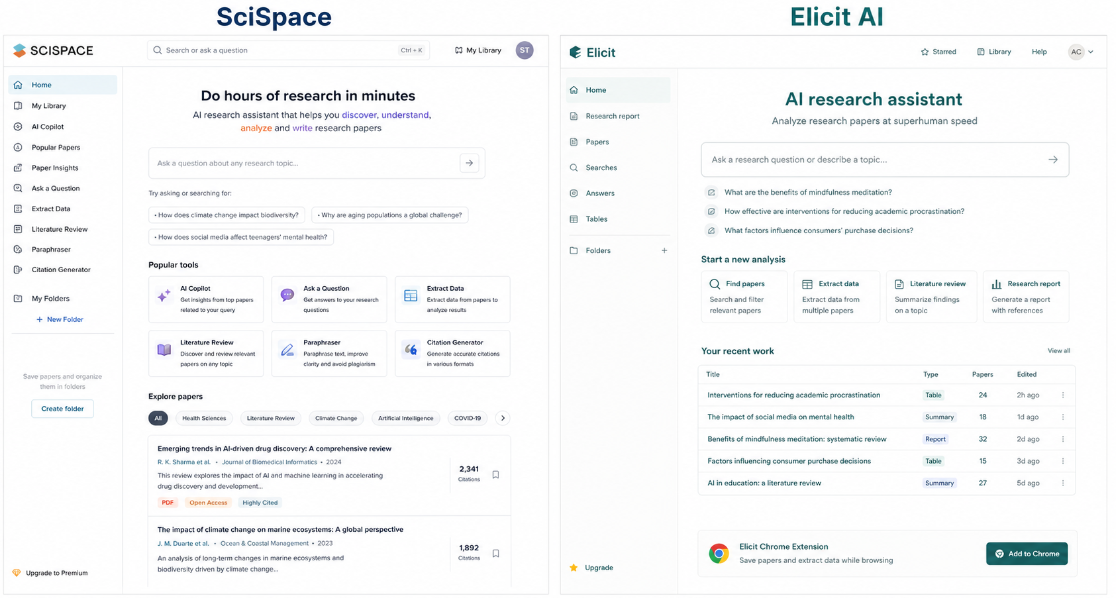
First, let’s look at the basics. SciSpace works as an all-in-one research helper. It searches over 280 million papers. It also chats with PDFs, writes drafts, and builds literature reviews. Millions of researchers use it every day.
Meanwhile, Elicit AI focuses on careful evidence work. It searches more than 138 million academic papers. It builds research reports and runs systematic reviews. Elicit aims for high accuracy in every step. It backs every claim with clear citations.
Both tools save time. However, they shine in different areas. SciSpace helps with reading and writing. Elicit helps with structured checks and data pulls.
Accuracy Claims and Real Tests
Accuracy is the key question here. Elicit states it is the most accurate AI product for scientific research. It shows strong test results. In one large check across nearly 1,000 Cochrane reviews, Elicit reached 95% search recall. It also hit 97% on abstract screening, 99% on full-text screening, and 96% on data extraction.
Other tests back this up. Data extraction often scores around 94%. Some case studies reach 99.4% on specific points. These numbers come close to careful human work. Elicit always shows the exact sentence that supports each claim. This makes checking easy.
SciSpace does not publish the same detailed accuracy numbers for systematic tasks. Users praise it for clear explanations of hard papers. It works well for quick understanding. Yet independent comparisons note that Elicit leads on structured accuracy. SciSpace wins on breadth and ease for early exploration.
In short, Elicit shows stronger proof for accuracy in review and extraction work. SciSpace stays strong for daily reading and drafting.
Feature Comparison Table
Here is a simple side-by-side look at main features:
| Feature | SciSpace | Elicit AI |
|---|---|---|
| Paper database | 280M+ papers | 138M+ papers |
| Best strength | PDF chat, writing, broad search | Systematic reviews, data extraction |
| Screening tools | Basic | Strong, structured criteria |
| Data extraction | Up to 50 columns (paid) | Strong custom columns, high accuracy |
| AI writing help | Yes, with citations | Limited to reports |
| Citation style | Good support | Sentence-level citations |
| Time savings reported | High for reading and drafting | Up to 80% for systematic reviews |
This table shows the clear split. SciSpace covers more steps from start to finish. Elicit goes deeper on evidence quality.
Pricing and Access
Both tools offer free plans. SciSpace gives limited credits and some free extraction columns. Paid plans start lower and rise with more features. Elicit offers free unlimited search. Its Pro plan costs about $49 per month when billed yearly. That plan unlocks full systematic review tools. Higher tiers exist for teams.
Therefore, cost depends on your work volume. Heavy systematic review users often find Elicit worth the price. Casual readers may stay happy with SciSpace free or lower tiers.
When to Choose Each Tool
Choose Elicit if accuracy tops your list. It works best for systematic reviews, meta-analysis prep, or any task that needs reliable data tables. Researchers in medicine, policy, and clinical fields often prefer it. The clear citations and high test scores build trust.
On the other hand, pick SciSpace if you need speed across many tasks. It helps students and writers who read many papers and then draft text. Its PDF chat explains tough sections in simple words. The larger paper set also helps early discovery.
Many experts use both. They start with SciSpace for wide search. Then they move key papers to Elicit for careful extraction. This mix gives both speed and accuracy.
Real-World Strengths and Limits
Elicit still needs human checks. No AI is perfect. Complex or poorly written papers can cause small errors. Yet its scores stay high in controlled tests. SciSpace can sometimes surface broader or less formal sources. Users must still judge paper quality themselves.
Furthermore, both tools improve over time. New features appear often. Always test them on your own questions. Compare the sources they pull. Check the original papers when stakes are high.
Final Verdict: Which Is Most Accurate?
Elicit AI currently leads on accuracy for scientific research tasks. Its published test results, sentence-level citations, and focus on systematic workflows give it the edge. SciSpace offers excellent support for reading, explaining, and writing. It covers more of the research day. Yet when pure accuracy matters most, Elicit stands out.
In addition, the right choice depends on your goal. Need rigorous evidence tables? Go with Elicit. Need fast paper understanding and drafts? Choose SciSpace. Many researchers keep both open. That way they gain the strengths of each tool.
Start with free accounts on both sites. Run the same research question. See which answers feel more solid and easier to verify. Your own test will give the clearest answer. Accurate tools save time and raise the quality of every project. Choose wisely and keep checking the original sources.