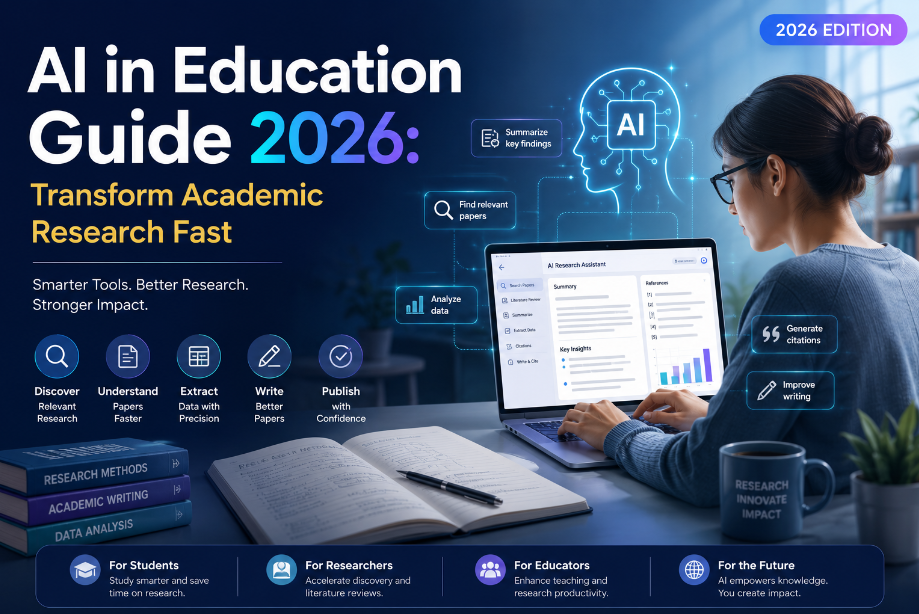
AI in Education Guide 2026: Transform Academic Research Fast – Artificial intelligence changes education fast in 2026. Students and teachers use it every day. Researchers gain the most. AI helps them find papers, check facts, and write faster. This guide shows you how. You can transform academic research quickly. Read on and learn simple steps.
First, AI becomes a daily helper in schools and labs. OECD reports explore how generative AI works in education. Many countries set new rules. Schools teach AI skills early. Universities add AI tools to research classes. As a result, students finish work sooner. Teachers focus more on ideas. Research moves ahead at high speed.
Next, academic research used to take months. You searched libraries for hours. You read stacks of papers. You noted facts by hand. Now AI does much of that work. However, you still check every result. Tools pull from real papers. They show sources. Therefore, you stay accurate. In addition, you save time for deep thinking.
Why AI Matters for Research in 2026
AI tools grow smarter each year. Consensus searches over 200 million papers. Elicit pulls details from studies. Semantic Scholar gives short summaries. NotebookLM works with your own files. Litmaps and ResearchRabbit show how papers link. These tools come from trusted sources in 2026 guides.
Moreover, governments support AI learning. The United States launched plans for youth AI education. UNESCO looks at fair use around the world. Brookings studies how AI helps students. Because of this support, more people access good tools. Schools and labs adopt them fast.
Yet AI is not perfect. It can miss details. It may mix facts. So always verify. Read the original paper. Compare claims. Then you keep quality high.
Top Ways AI Speeds Academic Research
AI transforms research in clear steps. First, it finds papers. Second, it maps connections. Third, it extracts facts. Fourth, it helps writing. Fifth, it reviews drafts. Let’s look at each one.
Start with discovery. Type a question into Consensus. It shows if studies say yes or no. It lists key papers. Elicit finds papers and builds tables. Semantic Scholar offers free search with smart tips. Perplexity gives quick overviews. Use these first. Then move to deeper work.
After that, map the field. Litmaps draws citation networks. ResearchRabbit suggests new papers like a playlist. Connected Papers groups similar studies. You see how ideas grow. You spot gaps fast. In addition, you avoid missing important work.
Next, extract evidence. Upload papers to NotebookLM. Ask questions. It answers from your files only. Elicit pulls methods and results into tables. Julius AI helps explore data sets. These steps cut reading time. Therefore, you focus on analysis.
Then, write and review. AI tools outline ideas. They check structure. They flag weak points. Still, you write the final words. You own the thoughts. After all, AI supports. It does not replace you.
Simple Steps to Use AI for Research
Follow this easy plan. First, pick one clear question. Second, search with Consensus or Semantic Scholar. Third, save good papers. Fourth, map links with Litmaps or ResearchRabbit. Fifth, extract facts with Elicit or NotebookLM. Sixth, draft notes. Seventh, check everything yourself. Finally, write and submit.
Also, start free. Most tools offer free plans. Upgrade only if needed. Train yourself. Watch short guides. Practice on small topics. Then scale up. Because practice builds skill.
Moreover, set rules. Never copy AI text as your own. Always cite sources. Tell readers when AI helped. This keeps work honest. Schools expect it now.
Benefits You Can See Right Away
Researchers report big gains. Literature reviews finish in days, not weeks. Evidence tables appear fast. Citation maps reveal new paths. Writing flows better. As a result, more papers get published. Students finish theses sooner. Labs move projects ahead.
In addition, access improves. Free tools open doors. People in many countries use the same strong options. Personalized paths help different learners. Engagement rises in classes. Yet the human role stays central. You choose questions. You judge quality. AI only speeds the middle steps.
However, challenges remain. Privacy needs care. Bias can hide in data. Overuse may weaken skills. So balance is key. Use AI for routine tasks. Keep deep thinking for yourself. Then growth continues.
Tips for Best Results in 2026
Choose tools that show sources. Avoid pure chatbots for core facts. Combine several tools. One finds. Another maps. A third extracts. This workflow works well.
Furthermore, stay updated. New features appear often. Read 2026 tool lists from reliable sites. Test free versions first. Join campus workshops if available.
Also, teach others. Share methods with classmates or colleagues. Build team habits. Research improves together.
Finally, remember ethics. Follow school rules. Protect data. Credit AI help when required. This builds trust.
Looking Ahead
AI in education keeps growing. Tools will get better. More people will use them. Academic research will move faster. Yet the core stays the same. Curiosity drives discovery. Careful work builds knowledge. AI simply removes slow barriers.
In short, start today. Pick one tool. Try one search. See the speed. Then add more steps. Your research will transform. You will work smarter. Progress will come sooner.
This guide uses current 2026 sources. Tools and trends come from recent reviews and reports. Always check the latest updates yourself. Now go transform your academic research. The tools wait for you.