
Best Study Workflows Using Anki and Quizlet Every Day Today – Do you want to remember more with less effort? Then daily flashcard habits with Anki and Quizlet can help. These tools work well together. Anki shines for long-term memory. Quizlet makes short sessions easy and fun. When you use both every day, you build strong recall. This guide shows simple workflows that fit real student life in 2026.
Spaced repetition is the key idea. It shows cards just before you forget them. Research and student results support this approach. Anki uses strong algorithms like FSRS. Quizlet offers quick adaptive modes. Together they cover both deep learning and light practice.
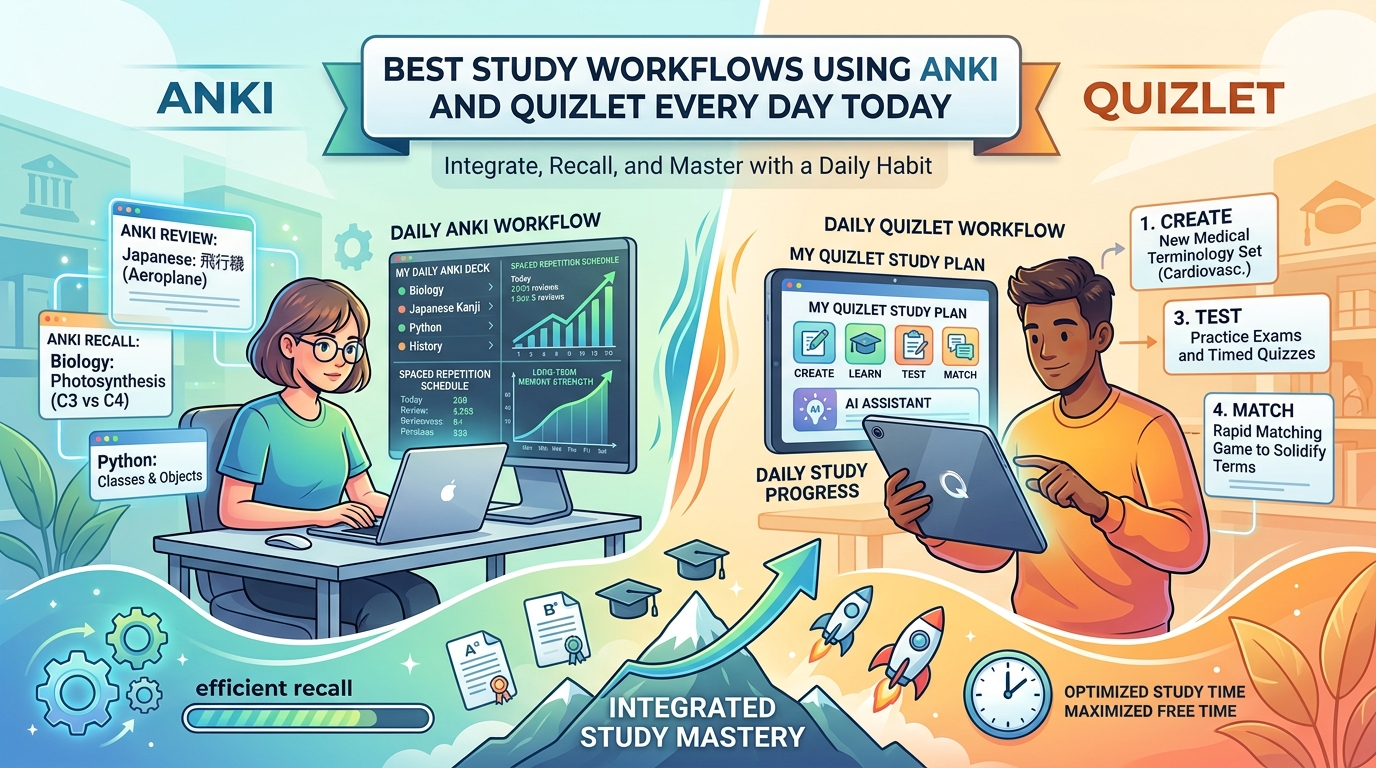
Why Combine Anki and Quizlet?
Anki is free on desktop and Android. It offers top-level spaced repetition. You control every setting. Medical students and language learners love it for lasting results. Quizlet has a huge library of ready sets. Its interface feels modern. Games and group features keep study light.
However, each tool has limits. Anki needs some setup time. Quizlet’s spacing is simpler and works best for near-term tests. Therefore, many students use both. For example, they grab a Quizlet set for class review. Then they move key facts into Anki for months of retention. This mix saves time and boosts results.
In addition, daily use matters most. Missing days creates big review piles. Consistent short sessions beat long weekend crams. Start small and build the habit.
A Simple Daily Workflow That Works
Here is a clear plan you can start today. Aim for 20 to 45 minutes total. Adjust times to fit your schedule.
First, do your Anki reviews in the morning. Open the app and clear due cards. Rate each one honestly. Use “Again” if you struggle. This keeps the algorithm accurate. Most people finish this in 15 to 30 minutes. Keep new cards low—about 10 to 20 per day at first. Too many new cards later create overload.
Next, create or edit cards after class or reading. Make short, clear cards. One fact per card works best. Add images or cloze deletions when helpful. If you find a good Quizlet set, export it and import into Anki. This step takes 10 to 15 minutes.
Then, use Quizlet for variety in the afternoon or evening. Play Match or Learn mode with classmate sets. Or test yourself on new terms. This keeps energy high and covers social study needs.
Finally, end the day with a quick Anki check if any new cards remain. Consistency builds stronger memory over weeks.
Here is a sample daily schedule in table form:
| Time of Day | Activity | Tool | Suggested Time |
|---|---|---|---|
| Morning | Clear due reviews | Anki | 15–30 min |
| After class | Make or import new cards | Anki | 10–15 min |
| Afternoon/Evening | Quick games or Learn mode | Quizlet | 10–15 min |
| Optional evening | Light new card review | Anki | 5–10 min |
This table keeps the plan visual and easy to follow. Change the times if needed. The order stays the same for best results.
New users should start with our Anki and Quizlet beginner guide.
Tips for Better Cards and Settings
Good cards make everything easier. Write questions on the front. Put short answers on the back. Avoid long paragraphs. Use images for diagrams when possible. For Anki, enable FSRS if available. It often reduces review load while keeping high retention. Set desired retention around 90 percent for balance.
Moreover, limit new cards. Start with 10 to 20 daily. Raise the number only after reviews stay manageable. Bury related cards so you do not see similar ones in one session. These small choices protect your time.
In Quizlet, search for high-quality sets first. Create your own when the topic is unique. Use different modes to stay engaged. Switch between tools so study never feels boring.
Also, track your progress. Anki shows clear stats. Notice which cards you miss often. Fix weak cards or break them into smaller pieces. Over time your daily load stays steady even as knowledge grows.
You can combine these workflows with our tips on how to use Anki and Quizlet for faster studying.
Common Pitfalls and How to Avoid Them
Many people add too many cards at once. As a result, reviews explode after a week. Therefore, grow slowly. Another issue is skipping days. The algorithm works best with daily input. If you miss one day, return the next day and clear the pile. Do not quit.
Furthermore, poor card design wastes time. Vague questions lead to weak memory. Keep cards atomic—one idea only. Test yourself actively. Look away and recall before flipping.
Some students rely only on Quizlet for hard subjects. That works for short tests. However, long-term goals need Anki’s stronger spacing. Use both when the material must last beyond one semester.
Making the Habit Stick Every Day
Link the workflow to an existing routine. For example, open Anki right after morning coffee. Or do Quizlet on the bus. Small anchors help the habit grow. Set a phone reminder if needed. Celebrate small wins, such as a clean review queue.
In addition, review the plan weekly. Ask yourself: Are sessions still short? Are cards clear? Adjust new-card limits if reviews feel heavy. Flexibility keeps the system alive.
Students in many fields report better exam scores and less last-minute panic with this approach. Daily short sessions create lasting knowledge. The science of spaced repetition and retrieval practice supports these results.
Start Today and Stay Consistent
Choose one subject first. Set up an Anki deck and find a matching Quizlet set. Follow the morning-review, after-class-create, evening-variety pattern. Keep sessions short. Be honest with ratings. Within two weeks the habit feels natural.
As a result, you remember more while studying less overall. Anki handles deep retention. Quizlet adds speed and fun. Used every day, they form one of the strongest study workflows available right now.
Try the plan this week. Track how you feel after seven days. Most people notice clearer recall and lower stress. Keep going and the benefits compound. Your future self will thank you for the daily effort.